Showing posts with label Business Opportunity. Show all posts

Friday, 29 June 2018

Our Calgary Oil & Gas Show Booth & Slide Show

At the invitation of one of our suppliers, AVNET, I got to spend the day manning a spot in their booth.

image

Calgary International Oil & Gas Show 2018 AVNET Booth

Sitting on the table at the left is one of our Kepler-47 nodes and a series of storage devices one of which is a disassembled hard drive.

There were great conversations to be had with the folks at the other booths including Intel, Kingston, and Microsoft and their Azure IoT team among others.

Thanks to AVNET and the team. They were very gracious. :)

Here's the slideshow I put together for that monitor on the wall.

image

image

image

image

image

image

image

image

image

image

image

image

Just a note on the mentioned Intel OmniPath setup. In conversation with Intel post-slide creation it seems that OPA is not a Windows focused architecture so there's no opportunity for us to utilize it in our solutions.

To our Canuck readers have a great long weekend and to everyone else have a great weekend. :)

Thanks for reading!

Philip Elder
Microsoft High Availability MVP
MPECS Inc.
Co-Author: SBS 2008 Blueprint Book
Our Web Site
Our Cloud Service

Wednesday, 25 April 2018

Working with and around the Cloud Kool-Aid

The last year and a half have certainly had their challenges. I've been on a road of both discovery and of recovery after an accident in November of 2016 (blog post).

Most certainly one of the discoveries is the amount of tolerance for fluff, especially marketing fluff, has been greatly reduced. Time is precious, even more so when one's faculties can be limited by head injury. :S

Microsoft's Cloud Message

It was during one of the last feedback sessions at MVP Summit 2018 that a startling realization came about: There's still anger, and to some degree bitterness, towards Microsoft and the cloud messaging of the last ten to twelve years. My session at SMBNation 2012 had some glimpses into that anger and struggle about our business and its direction.

After the MVP Summit 2018 session, when discussing it with a Microsoft employee that I greatly respect, his response to my apology for the glimpse into my anger and bitterness was, "You have nothing to apologize for". That affirmation brought a lot home.

One realization is this: The messaging from Microsoft, and others, around Cloud has not changed. Not. One. Bit.

That messaging started out oh so many years ago as, "Your I.T. Pro Business is going to die. Get over it" to paraphrase Microsoft's message to change business models or else when BPOS was launched.

The messaging was "successful" to some degree as the number of I.T. Pro consultants and small businesses that hung up their guns during that first four to six year period was substantial.

And yet, it wasn't as much of the SMB focused Microsoft Partner network basically left Cloud sales off the table when dealing with their clients.

Today, the content of the message and to some degree the method of delivering the message may be somewhat masked but it is still the same: Cloud or die.

At this last MVP Summit yet another realization came when listening to a fellow MVP and some Blue Badges (Microsoft employees) discussing various things around Cloud and Windows. It had never occurred to me to consider that the pain we were feeling out on the street would also be had within Microsoft and to some degree other vendors adopting a Cloud service.

The recent internal shuffle in Microsoft really brought that home.

On-Premises, Hybrid, and/or Cloud

We have a lot of Open Value Agreements in place to license our client's on-premises solution sets.

Quite a few of them came up for renewal this spring. Our supplier Microsoft licensing contact, and the contractor (v-) that kept calling, were trying to push us into Cloud Solution Provider (CSP) for all of our client's licensing.

Much of what was said in those calls was:

  • Clients get so much more in features
  • Clients get access anywhere
  • Clients are so much more agile.
  • Blah, blah, blah
  • Fluff, fluff, fluff

The Cloud Kool-Aid was being poured out by the decalitre. ;)

So, our response was, "Let's about our Small Business Solution (SBS)" and it's great features and benefits and how our clients have full features both on-premises, via the Internet, or anything in-between. And, oh, it's location and device agnostic. We can also run it on-premises or in someone else's Cloud.

That usually led to some sort of stunned silence on the other end of the phone.

It's as if the on-premises story has somehow been forgotten or folks have developed selective amnesia around it.

What's neat though is that our on-premises highly available solutions are selling really well especially for folks that want cloud-like resilience for their own business.

That being said, there _is_ a place for Cloud.

As a rule, Cloud is a great way to extend on-premises resources for companies that experience severe business swings such as construction companies that have slowdowns due to winter. The on-premises solution set can run the business through the quieter months then things get scaled-up during summer in the Cloud. In this case the Cloud spend is equitable.

Business Principled Clarity

There are two very clear realities for today's I.T. Pro and SMB/SME I.T. Business:

  1. On-Premises is not going away
  2. Building a business around Cloud is possible but difficult

The on-premises story is not going to change. One can repeat the Cloud message over and over and to some degree it becomes "truth". That's an old adage. However, the realities on the ground remain ... despite the messaging.

Okay, so maybe in the smaller 10 or less seat business where an all-in for Cloud may make sense (make sure to add all of those bills up and be sitting when doing so!).

That being said, our smallest High Availability client is 15 seats with a disaggregate converged cluster. That was before our Storage Spaces Direct Kepler-47 was finalized as that solution starts at a third of the cost.

For the on-premises story there are two primary principles operating here:

  1. The client wants to own it
  2. The client wants full control over their data and its access

Cloud vendors are not obligated, and in many cases can't say anything, when law enforcement shows up to either snoop or even, in some cases, to remove the vendor's physical server systems.

Many businesses are very conscious of this fact. Plus, many governments have a deep reach into other countries as the newly minted, as of this writing, EU privacy laws seem to be demonstrating.

Now, as far as building a business around another's Cloud offerings there are two ways that we see that happening with some success:

  1. Know a Cloud Vendor's products through and through
  2. Build a MSP (Managed Service Provider) business supporting endpoints

The first seems to be really big right now. There's a lot of I.T. companies out there selling cloud with no idea of how to put it all together. The companies that do know how to put it all together are growing in leaps and bounds.

The MSP method is, and has been, a way to keep that monthly income going. But, don't count on it being there for too much longer as _all_ Cloud vendors are looking to kill the managed endpoint in some way.

Our Direction

So, where do we fit in all of this?

Well, our business strategy has been pretty straightforward:

  1. Keep developing and providing cloud-like services on-premises with cloud-like resilient solutions for our clients
  2. Hybrid our on-premises solutions with Cloud when the need is there
  3. Continue to help clients get the most out of their Cloud services
  4. Cultivate our partnerships with SMB/SME I.T. organizations needing HA Solutions

We have managed to re-work our business model over the last five to ten years and we've been quite successful at it. Though, it is still a work in progress and probably will remain so given the nature of our industry.

We're pretty sure we will remain successful at it as we continue to put a lot of thought and energy into building and keeping our clients and contractors happy.

Ultimately, that goal has not changed in all of the years we've been in business.

We small to medium I.T. shops have the edge over every other I.T. provider out there.

"How is that?", you might ask.

Well, we _know_ how to run a small to medium business and all of the good and bad that comes with it.

That translates into great products and services to our fellow SMB/SME business clients. It really is that easy.

The hard part is staying on top of all of the knowledge churn happening in our field today.

Conclusion

Finally, as far as the anger, and to some degree bitterness, goes: Time. It will take time before it is fully dealt with.

In the mean time ...

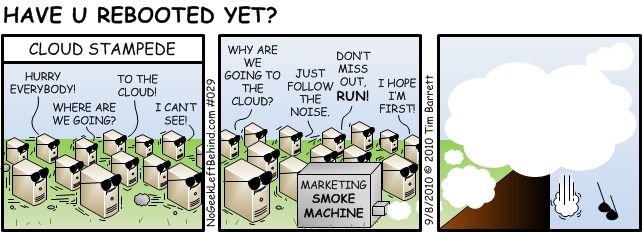
A friend of mine, Tim Barrett did this comic many years ago (image credit to NoGeekLeftBehind.com):

image

The comic definitely puts an image to the Cloud messaging and its results. :)

Let's continue to build our dreams doing what we love to do.

Have a fantastic day and thanks for reading!

Philip Elder
Microsoft High Availability MVP
MPECS Inc.
Co-Author: SBS 2008 Blueprint Book
Our Web Site
Our Cloud Service

Thursday, 9 November 2017

Intel Server System R2224WFTZS Integration & Server Building Thoughts

We have a brand new Intel Server System R2224WFTZS that is the foundation for a mid to high performance virtualization platform.

image

Intel Server System R2224WFTZS 2U

Below it sits one of our older lab Intel Server System SR2625URLX 2U. Note the difference in the drive caddy.

That change is welcome as the caddy no longer requires a screwdriver to set the drive in place:

image

Intel 2.5" Tooless Drive Caddy

What that means is the time required to get 24 drives installed in the caddies went from half an hour or more to five or ten minutes. That, in our opinion, is a great leap ahead!

The processors for this setup are Intel Xeon Gold 6134s with 8 cores running at 3.2GHz with a peak of 3.7GHz. We chose the Gold 6134 as a starting place as most of the other CPUs have more than eight cores thus pushing up the cost of licensing Microsoft Windows Server Standard or Datacenter.

image

Intel Xeon Gold 6134, Socket, Heatsink, and Canadian Loonie $1 Coin

The new processors are huge!

The scale difference between the E3-1200 series, E5-2600 series is orders of magnitude larger. The jump in size reminds me of the Pentium Pro's girth next to the lesser desktop/server processors of the day.

image

Intel Xeon Processor E3-1270 sits on the Intel Xeon Gold 6134

The server is nearly complete.

image

Intel Server System R2224WFTZS Build Complete

Bill of Materials

In this setup the server's Bill of Materials (BoM) is as follows:

  • (2) Intel Xeon Gold 6134
  • 384GB via 12x 32GB Crucial DDR4 LRDIMM
  • Intel Integrated RAID Module RMSP3CD080F with 7 Series Flash Cache Backup
  • Intel 12Gbps RAID Expander Module RES3TV360
  • (2) 150GB Intel DC S3520 M.2 SSDs for OS
  • (5) 1.9TB Intel DC S4600 SATA SSDs for high IOPS tier
  • (19) 1.8TB Seagate 10K SAS for low to mid IOPS tier
  • Second Power Supply, TPM v2, and RMM4 Module

It's important to note that when setting up a RAID controller instead of a Host Bus Adapter (HBA) that does JBOD only we require the flash cache backup module. In this particular unit one needs to order the mounting bracket: AWTAUXBBUBKT

I'm not sure why we missed that, but we've updated our build guides to reflect the need for it going forward.

One other point of order is the rear 2.5" hot swap drive bay kit (A2UREARHSDK2) does not come installed from the factory in the R2224WFTZS as it did in the R2224WTTYS. I'm still not sold on M.2 for the host operating system as they are not hot swap capable. That means, if one dies we have to down a node in order to change it. With the rear hot swap bay we can do just that, swap out the 2.5" SATA SSD that's being used for the host OS.

For the second set of two 10GbE ports we used an Intel X540-T2 PCIe add-in card as the I/O modules are not in the distribution channel as of this writing.

NOTE: One requires a T30 hex screwdriver for the heatsinks! After installing the processor please make sure to start all four nuts prior to tightening. As a suggestion, from there snug each one up gradually starting with the two middle nuts then the outer nuts similar to the process for installing a head on an engine block. This process provides an even amount of pressure from the middle of the heatsink outwards.

Firmware Notes

Finally, make sure to update the firmware on all components before installing an operating system. There are some key fixes in the motherboard firmware updates as of this writing (BIOS 00.01.0009 ReadMe). Please make sure to read through to verify any caveats associated with the update process or the updates themselves.

Next up on our build process will be to update all firmware in the system, install the host operating system and drivers, and finally run a burn-in process. From there, we'll run some tests to get a feel for the IOPS and throughput we can expect from the two RAID arrays.

Why Build Servers?

That's got to be the burning question on some minds. Why?

The long and the short of it is because we've been doing so for so many years it's a hard habit to kick. ;)

Actually, the reality is much more mundane. We continue to be actively involved in building out our own server solutions for a number of reasons:

  • We can fine tune our solutions to specific customer needs
    • Need more IOPS we can do that
    • Need more throughput we can do that
    • Need a blend of the two as is the case here, then we can do that too.
  • Direct contact with firmware issues, interoperability, and stability
    • Making the various firmware bits play nice together can be a challenge
  • Driver issues, interoperability, and stability
    • Drivers can be quite finicky about what's in the box with them
  • Hardware interoperability
    • Our parts bin is chalk full of parts that refused to work with one another
    • On the other hand our solution sets are known good configurations
  • Cost
    • Our server systems are a fraction of the cost of Tier 1
  • Overall system configuration
    • As Designed Stability out of the box
  • He said She said
    • Since we test our systems extensively prior to deploying we know them well
    • Software Vendors that point the finger have no leg to stand on as we have plenty of charts and graphs
    • Performance issues are easier to pinpoint in software vendor's products
    • We remove the guesswork around an already configured Tier 1 box

Business Case

The business case is fairly simple: There are _a lot_ of folks out there that do not want to cloud their business. We help customers with a highly available solution set and our business cloud to give them all of the cloud goodness but keep their data on-premises.

We also help I.T. Professional Shops who may not have the skill-set on board that have customers with a need for High Availability and a cloud like experience but want the solution deployed on-premises.

For those customers that do want to cloud their business we have a solution set for the Small to Medium I.T. Shops that want to provide multi-tenant solutions in their own data centres. We provide the solution and backend support at a very reasonable cost while they spend their time selling their cloud.

All in all, we've found ourselves a number of different great little niches for our highly available solutions (clusters) over the last few years.

Thanks for reading! :)

Philip Elder
Microsoft High Availability MVP
MPECS Inc.
Co-Author: SBS 2008 Blueprint Book
Our Web Site
Our Cloud Service
Twitter: @MPECSInc

Thursday, 22 June 2017

Disaster Preparedness: KVM/IP + USB Flash = Recovery. Here’s a Guide

One of the lessons the school of hard knocks taught us was to be ready for anything. _Anything_

One client space had such a messed up HVAC system that the return air system, which is in the suspended ceiling, didn’t work because most of the vent runs up there were not capped properly. We had quite a few catastrophic failures at that site, as the server closet’s temperatures were always high but especially so in the winter. Fortunately, they moved out of that space a few years ago.

Since we began delivering our standalone Hyper-V solutions, Storage Spaces Direct (S2D) Hyper-Converged or SOFS clusters, and Scale-Out File Server and Hyper-V clusters into Data Centers around the world, we have discovered that there is a distinct difference in Data Centre services quality. As always, “buyer beware” and “We get what we pay for”.
So, what does that mean?

It means that, whether on-premises (“premises” not “premise”), hybrid, or all-in the Cloud we need to be prepared.
For this post, let us focus in on being ready for a standalone system or a cluster node failure.

There are four very important keys to being ready:

  1. Systems warranties
    1. 4-Hour Response in a cluster setting
    2. Next Business Day (NBD) for others is okay
  2. KVM over IP (KVM/IP) is a MUST
    1. Intel RMM
    2. Dell iDRAC Enterprise
    3. iLO Advanced
    4. Others …
  3. Bootable USB Flash Drive (blog post)
    1. 16GB flash drive
    2. NTFS formatted ACTIVE
    3. Most current OS files set up and maintained
    4. Keep those .WIM files up to date (blog post)
  4. Either Managed UPS or PDU
    1. Gives us the ability to power cycle the server’s power supply or supplies.

In our cluster settings, we have our physical DC (blog post)  set up for management. We can use that as our platform to get to the KVM/IP to begin our repair and/or recover processes.

This is what the back of our (S2D) cluster looks like now:

image

The top flash drive is what we have been using for the last few years. A Kingston DTR3 series flash drive.

The bottom one is a Corsair VEGA. We have also been trying out the SanDisk Cruzer Fit that is even smaller than that!

The main reason for the change is to remove that fob sticking off the back or front of the server. In addition, the VEGA or Fit have such a small profile we can ship them plugged in to the server(s) and not worry about someone hitting them once the server is in production.

Here is a quick overview of what we do in the event of a problem:

  1. Log on to our platform management system
  2. Open the RMM web page
  3. log on
  4. Check the baseboard management controller logs (BMC/IPMI logs page)
    1. If we see the logs indicate a hard-stop them we’re on to initiate warranty replacement
    2. If it is in the OS somewhere then we can either fix or rebuild
  5. Rebuild
    1. Cluster: Clean up domain AD, DNS, DHCP, and Evict OLD Node from Cluster
    2. Reset or Reboot
    3. Function Key to Boot Menu
    4. Boot flash
    5. Install OS to OS partition/SSD
    6. Install and configure drivers
    7. Cluster: Join Domain
      1. Server name would be the same as downed node
      2. Update Kerberos Constrained Delegation
    8. Install and configure the Hyper-V and/or File Services Roles
    9. Set up networking
    10. Standalone: Import VMs
    11. Cluster: Join and Live Migrate on then off to test

Done.

The key reason for the RMM and flash drive? We just accomplished the above without having to leave the shop.

And, across the entire life of the solution if there is a hiccup to deal with we’re dealing with it immediately instead of having to travel to the client site, data centre, or third party site to begin the process.

One more point: This setup allows us to deploy solutions all across the world so long as we have an Internet connection at the server’s site.

There is absolutely no reason to deploy servers without a RMM or desktops/laptops/workstations without vPro. None. Nada. Zippo.

When it comes to getting in to the network, we can use the edge to VPN in or have an IP/MAC filtered firewall rule with RDP inbound to our management platform. One should _never_ open the firewall to a listening RDP port no matter what port it would be listening on.

Philip Elder
Microsoft High Availability MVP
MPECS Inc.
Co-Author: SBS 2008 Blueprint Book
Our Cloud Service
Twitter: @MPECSInc

Saturday, 4 February 2017

Hyper-V Compute, Storage Spaces Storage, and S2D Hyper-Converged Solutions

Lately, we here at MPECS Inc. have been designing, implementing, servicing, and supporting highly available solutions for hyper-converged, Hyper-V compute, Storage Spaces storage, and lab environments along with standalone Hyper-V server solutions.

Here are some of the things we have been working on recently or have deployed within the last year.

Cluster Solutions

As has been posted here on our blog previously, we have invested heavily in the Windows Server 2016 story especially in Storage Spaces Direct (S2D) (S2D blog posts):

image

Proof-of-Concept (PoC) Storage Spaces Direct (S2D) Hyper-Converged or S2D SOFS cluster solution

The above Storage Spaces Direct PoC, based on the Intel Server System R2224WTTYSR, provides us with the necessary experience to deliver the hundreds of thousands of real every-day IOPS that our client solutions require. We can tailor our solution for a graphics firm to allow for multiple 10GbE data reads to their user’s systems or an engineering and architectural firm that requires high performance storage for their rendering farms.

Another Storage Spaces Direct PoC we are working on is the Kepler-47 (TechNet Blog Post):

image

Proof-of-Concept Storage Spaces Direct 2-Node for under $8K with storage!

Our goal for Kepler-47 is to deploy this solution into all clients that were normally deploying a single or dual Hyper-V server setup with Hyper-V Replica. Our recipe includes Intel 3700, 3600, and 3500 series SSDs, SuperMicro Mini-ITX Intel Xeon Processor E5-1200v5 series board, the 8-bay chassis, and Mellanox ConnectX-3 for direct connected RDMA East-West traffic. Cost for the 2-node cluster is about the same as one bigger Intel Server System that would run a client’s entire virtualization stack.

image

2016: Deployed 2 Node SOFS via Quanta JB4602 with ~400TB Storage Spaces Parity

In the late summer of 2016 we deployed the above SOFS cluster with the ultimate aim of adding three more JBODs for over 1.6PB (Petabytes) of very cost efficient Storage Spaces Parity storage for our client’s video and image files archive. The solution utilizes four 10GbE paths per node and SMB Multichannel to provide robust access to the files on the cluster. Six HGST SAS SSDs provide the needed high-speed cache for writes to the cluster.

Our smallest cluster client is a 15 seat accounting firm with a 2 node clustered Storage Spaces and Hyper-V cluster (our blog post). Some of our largest clients are SME hosting companies with hundreds of tenants and VMs running on SOFS storage and Hyper-V compute clusters.

We can deploy highly available solutions for $6K in hardware and up rendering standalone Hyper-V or VMware solutions moot!

Server and Storage Hardware

We primarily utilize Intel Server Systems and Storage as Intel’s support is second to none and our solution price points become way more than competitive to equivalent Tier 1 solutions. When required, we utilize Dell Server Systems and Storage for solutions that require a 4-hour on-site warranty over 3 to 5 years or more.

Our primary go-to for disaggregated SOFS cluster storage (Storage Nodes + Direct Attached Storage JBOD(s)) are Quanta QCT JBODs and DataON Storage JBODs. We’ve had great success with both company’s storage products.

For drives we deploy Intel NVMe PCIe and 2.5”, Intel SATA SSDs, and HGST SAS SSDs. We advise being very aware of each JBOD vendor’s Hardware Compatibility List (HCL) before jumping on just any SAS SSD listed in the Windows Server Catalog Storage Spaces Approved list (Microsoft Windows Server Catalog Site for Storage Spaces).

Important: Utilizing just any vendor’s drive in a Storage Spaces or Storage Spaces Direct setting can be a _costly_ error! One needs to do a lot of homework before deploying any solution into production. BTDT (Been There Done That)

The spinning media we use depends on the hyper-converged or storage solution we are deploying and the results of our thorough testing.

Network Fabrics

In a Storage Spaces Direct (S2D) setting our East-West (node to node) fabric is 10Gb to 100Gb Mellanox with RDMA via RoCEv1 and RoCEv2 (RDMA over Converged Ethernet) (our blog post) depending on the Mellanox NIC ConnectX version. We also turn to RoCE for North-South (Compute to Storage) for our disaggregated cluster solutions.

For 10GbE starter solutions for both storage and compute network the NETGEAR XS716T is the go-to switch. We always deploy either the storage to compute or the workload Hyper-V virtual switch in pairs to provide network resilience. Their switches are very well priced for the entry-level to mid-level solutions we deploy.

Cluster Lab

It’s no secret that we invest a lot in our client solution labs and network shadow solutions (our blog post). It is a point of principle that we make sure our solutions work as promised _before_ we would even consider selling them to our clients.

One does not need to look far for five figure, six figure, seven figure, or more solution failures. Recent catastrophic failures at the Australian Tax Office (Bing search) or 123-reg (Bing search) come to mind. It’s not difficult to find stories of very expensive solutions failing to deliver on their big promises with a big price tag.

The onus is on us to make sure we can under promise and over deliver on every solution!

Our Solutions

We can deliver a wide variety of solutions with the following being a partial list.

  • Storage Spaces Direct (S2D)
    • 2 nodes to 16 Nodes
    • Hyper-Converged running both compute and storage
    • SOFS mode to provide high IOPS storage
    • Hardware agnostic solution sets
    • Host UPDs in Azure, on VMware, or our solutions
  • Scale-Out File Server Clusters (2 nodes to 5 1 JBOD or more) 
    • IOPS tuned for intended workload performance
    • Large Volume backup and archival storage
    • Multiple Enclosure Resilience for additional redundancy
  • Hyper-V Compute Clusters (2 nodes to 64)
    • Tuned to workload type
    • Tuned for workload density
  • Clustered Storage Spaces (2 nodes + 1 JBOD)
    • Our entry-level go-to for small to medium business
    • Kepler-47 fits in this space too
  • RDMA RoCE via Mellanox Ethernet Fabrics for Storage <—> Compute
    • We can deploy 10Gb to 100Gb of RDMA fabric
    • High-Performance storage to compute
    • Hyper-converged East-West fabrics
  • Shadow Lab for production environments
    • Test those patches or application updates on a shadow lab
  • Learning Lab
    • Our lab solutions are very inexpensive
    • Four node S2D cluster that fits into a carry-on
    • Can include an hour or more for direct one-on-one or small-group learning
      • Save _lots_ of time sifting through all the chaff to build that first cluster
  • Standalone Hyper-V Servers
    • We can tailor and deliver standalone Hyper-V servers
    • Hyper-V Replica setups to provide some resilience
    • Ready to greenfield deploy, migrate from existing, or side-by-side migrate

Our solutions arrive at our client’s door ready to deploy production or lab workloads. Just ask us!

Or, if you need help with an existing setup we’re here. Please feel free to reach out.

Philip Elder
Microsoft High Availability MVP
MPECS Inc.
Co-Author: SBS 2008 Blueprint Book

Tuesday, 15 November 2016

What’s in a Lab? Profit!

Our previous post on Server Hardware: The Data Bus is Playing Catch-Up has had a lot of traction.

Our tweets on I.T. companies not having a lab for their solutions sales engineers and technicians has had a lot of traction.

So, let’s move forward with a rather blunt opinion piece shall we? ;)

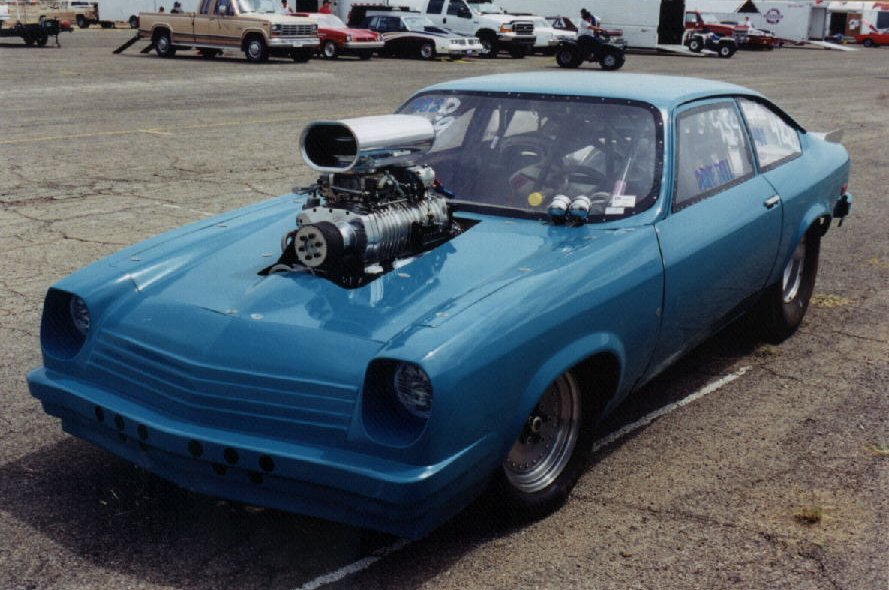
What client wants to drop $25K on an 800bhp blown 454CID engine then shovel it in to that Vega/Monza only to find the car twisted into a pretzel on the first run and very possibly the driver with serious injuries or worse?

image

Image credit

Seriously, why wouldn’t the same question be asked by a prospect or client that is about to drop $95K or more on a Storage Spaces Direct (S2D) cluster that the I.T. provider has _never_ worked with? Does the client or prospect even think of asking that question? Are there any references with that solution in production? If the answer is “No” then get the chicken out of that house!

In the automotive industry folks ask those questions especially when they have some serious coin tied up in the project … at least we believe they would based on previous experience.

Note that there are a plethora of videos on YouTube and elsewhere showing the results of so-called “tuners” blowing the bottom end out of an already expensive engine. :P

In all seriousness though, how can an I.T. company sell a solution to a client that they’ve never worked with, put together, tested, or even _seen_ before?

It really surprised me to be chatting with a technical architect that works for a large I.T. provider when they told me their company doesn’t believe there is any value in providing a lab for them.

S2D Lab Setup

A company that keeps a lab, refreshes it every so often, stands to gain so much more than folks that count the beans may see.

For S2D, the following is a good place, and inexpensive, to start:

  • Typical 4-node S2D lab based on Intel Server Systems
    • R2224WTTYSR Servers: $15K each
    • Storage
      • Intel 750 Series NVMe $1K/Node
      • Intel 3700 Series SATA $2K/Node
      • Seagate/HGST Spindles $3K/Node
    • Mellanox RDMA Networking: $18K (MSX1012X + 10GbE CX-3 Adapters)
    • NETGEAR 10GbE Networking: $4K (XS716T + X540-T2 or X550-T2)
    • Cost: ~$75K to $85K

The setup should look something like this:

image

S2D Lab (Front)

image

S2D Lab (Rear)

Note that we have two extra nodes for a Hyper-V cluster setup to work with S2D as a SOFS only solution.

Okay, so the bean counters are saying, “what do we get for our $100K hmmm?”

Point 1: We’ve Done It

The above racked systems images go into any S2D Proposal with an explanation that we’ve been building these hyper-converged clusters since Windows Server 2016 was in its early technical preview days. The prospect that sees the section outlining our efforts to fine tune our solutions on our own dime places our competitors at a huge disadvantage.

Point 2: References

With our digging in and testing from the outset we would be bidding on deals with these solutions. As a result, we are one of the few with go-to-market ready solutions and will have deployed them before most others out there even know what S2D is!

Point 3: Killer and Flexible Performance

Most solutions we would be bidding against are traditional SAN style configurations. Our hyper-converged S2D platform provides a huge step up over these solutions in so many ways:

  1. IOPS: NVMe utilized at the cache layer for real IOPS gains over traditional SAN either via Fibre Channel or especially iSCSI.
  2. Throughput: Our storage can be set up to run huge amounts of data through the pipe if required.
  3. Scalability: We can start off small and scale out up to 16 nodes per cluster.
    • 2-8 nodes @ 10GbE RDMA via Mellanox and RoCEv2
    • 8-16 nodes @ 40GbE RDMA via Mellanox and RoCEv2
      • Or, 100GbE RDMA via Mellanox and RoCEv2

This begs the question: How does one know how one’s solution is going to perform if one has never deployed it before?

Oh, we know: “I’ve read it in Server’s Reports”, says the lead sales engineer. ;)

Point 4: Point of Principle

It has been mentioned here before: We would never,_ever_, deploy a solution that we’ve not worked with directly.

Why?

For one, because we want to make sure our solution would fulfil the promises we’ve made around it. We don’t want to be called to come and pick up our high availability solution because it does not do what it was supposed to do. We’ve heard of that happening for some rather expensive solutions from other vendors.

Point 5: Reputation

Our prospects can see that we have a history, and a rather long one at that, of digging in quite deep both in our own pockets but also of our own time to develop our solution sets. That also tells them that we are passionate about the solutions we propose.

We _are_ Server’s Reports so we don’t need to rely on any third party for a frame of reference! ;)

Conclusion

Finally, an I.T. company that invests in their crew both in lab kit, time, training, and mentorship will find their crew quite passionate about the solutions they are selling and working with. That translates into sales but also happy clients that can see for themselves that they are getting a great value for their I.T. dollars.

I.T. Services Companies get and maintain a lab! It is worth it!

Philip Elder
Microsoft High Availability MVP
MPECS Inc.
Co-Author: SBS 2008 Blueprint Book
Our Cloud Service

Tuesday, 26 April 2016

Remote Desktop Services 301: Some Advanced RDS Setup Guidelines

Here are some of the key tenants we’ve picked up deploying standalone and farm based Remote Desktop Services (RDS) for our Small Business Solution (SBS) on-premises and in our cloud.

Virtual Desktop Infrastructure, or VDI for short, covers both Remote Desktop Services standalone, farm, and desktop operating system deployments.

This list, while not totally comprehensive, covers a lot of ground.

  • Hardware, Storage, and Networking
    • GHz and Cores are king
      • Balance core count and GHz versus cost
      • NOTE: Server 2016 licensing will be, and is as of this writing, based on core count!
        • Today is 2 sockets tomorrow is a server total of 16 cores
        • Additional Cores purchased in pairs
        • Example 1: Dual Socket 8 Core pair = 16 Cores total so OK in current and 2016 licensing
        • Example 2: Dual Socket 12 Core pair = 24 Cores total so base license of 16 Cores plus a purchase of 4 licenses (2 cores per license) would be required
        • NOTE: Examples may not line up with actual license terms! Please verify when 2016 goes live.
    • RAM is cheap so load up now versus later
    • Balanced RAM setup is better than Unbalanced
      • Balanced: 4x 16GB in primary memory channel slot
        • Best performance
      • Unbalanced: 4x 16GB in primary and 4x 8GB in secondary
        • Performance hit
    • ~500MB of RAM per user per session to start
    • 25-50 IOPS per user depending on workloads/workflows RDS/VDI
      • Average 2.5” 10K SAS is ~250 to 400 IOPS depending on stack format (stripe/block sizes)
    • Latency kills
      • Direct Attached SAS or Hyper-Converged is best
      • Lots of small reads/writes
    • Average 16bpp RDS session single monitor 23” or 24” wide: ~95KB/Second
      • Average dual monitor ~150KB/Second
      • Bandwidth use is reduced substantially with a newer OS serving and connecting remotely (RDP version)
  • LoBs (Line of Business applications)
    • QuickBooks, Chrome, Firefox, and Sage are huge performance hogs in RDSH
      • Be mindful of LoB requirements and provision wisely
    • Keep the LoB database/server backend somewhere else
    • In larger settings dedicate an RDSH and RemoteApp to the resource hog LoB(s)
  • User Profile Disks
    • Office 2013 and Exchange 2013 are a wash in this setting
      • Search is difficult if not broken
    • Search Index database will bloat and fill the system disk! (Blog post with “fix”)
    • Office 2016, though still a bit buggy as of this writing, and Exchange 2016 address UPDs and search
    • Be mindful of network fabrics between UPDs and RDSH(s)
    • Set the UPD initial size a lot larger than needed as it can’t be changed later without a series of manual steps
      • UPDs are dynamic
      • Keep storage limits in mind because of this
  • Printing
    • Printers with PCL 5/6 engines built-in are preferred
      • Host-based printers are a no-go for us
    • HP Professional series LaserJet printers are our go-to
    • HP MFPs are preferred over Copiers
      • Copier engines tend to be hacked into Windows while the HP MFP is built as a printer out of the box

Previous post on the matter: Some Remote Desktop Session Host Guidelines.

Here’s a snippet of Intel’s current Intel Xeon Processor E5-2600v4 line sorted by base frequency in GHz:

image

Depending on the deployment type we’re deploying either E5-2643v4 or E5-2667v4 processors for higher density setups at this time. We are keeping at or under eight cores per socket unless we absolutely require more due to the upcoming sockets to cores changes in Windows Server licensing.

If you’d like a copy of that spreadsheet ping us or visit the Intel Ark site.

Philip Elder
Microsoft High Availability MVP
MPECS Inc.
Co-Author: SBS 2008 Blueprint Book
Our Cloud

Tuesday, 27 January 2015

Business Guidance Pearls Mentoring Opportunity

Our blog post on Some IT Pro Business Guidance Pearls has generated a _lot_ of questions! Thank you for that. :)

So, how about this?

Third Tier has a special on a block of 3 hours that ends in a few days.

Drop in to the Third Tier Help Desk, register, and purchase a time block. From there, open a ticket: Business Guidance Pearls Mentorship.

I would pick up the ticket and get in touch about scheduling our time together.

The structure would be:

  • 1 Hour: Practice Assessment and Goals
  • 1 Hour: Goals Roadmap
  • 1 Hour: Goals Implementation Steps

I was very fortunate to have a former employer that worked very hard to teach me how to run an I.T. business. By “run” we’re talking about a lot more than just the bookkeeping and cash flow aspects.

Believe me when I say this, you’d not regret any minute spent. We’d look at the big picture right through to the details to facilitate growth in your I.T. Pro practice.

Philip Elder
Microsoft Cluster MVP
MPECS Inc.
Co-Author: SBS 2008 Blueprint Book

Chef de partie in the SMBKitchen ASP Project
Find out more at
Third Tier: Enterprise Solutions for Small Business

Thursday, 15 January 2015

Some IT Pro Business Guidance Pearls

Here are some bits and pieces of business wisdom that I’ve gathered over the years. Much of my initial business formation came from my first employer out here Larry MacDonald while working for Logical Computer Company.

  • Keep a business journal (for me it’s my blog, Twitter, and forum helps)
  • Document everything (take pictures of everything with SmartPhone, use Snip in Windows ALL THE TIME)
  • Create build documentation for everything
    • We have builds for clusters, Exchange setups, Exchange migrations, SBS setups, SBS Migrations, More
  • Be consistent (build documentation helps)
  • Use Tasks in Outlook and on the phone to track everything
  • Be disciplined in tracking, responding, and being present to clients
  • Spend 10%-20% on R&D
  • Spend 10%-15% on lunches, dinners, and such with others
  • Put 10% away for a rainy day
  • Get involved with user groups or start one
  • Get a _good_ accountant and keep them

As far as recurring revenue:

  • IMSNHO, blended is better than full MSP
  • ~$60/User to $110/User for:
    • Server OS patch, Server App patch, and Microsoft App patch/install management
    • Desktop OS patch and Microsoft App patch management
    • A/V Management along with e-mail sanitation (we use ExchangeDefender)
    • Remote Server Monitoring and management included
    • On-site not included
    • Phone and e-mail support beyond 15 minutes not included
  • Offer backup rotation with quarterly full bare metal or hypervisor restore
    • $150-$250 per OS per month
    • Need a dedicated box for this (Intel S1400FP4 with 96GB ECC, and RAID 6 across spindles or SSDs)

Services

  • Non-contract break/fix:
    • $250/Hr immediate response
    • $200/Hr 4 hour response
    • $175/Hr 24 hour response
  • Contract on above
    • 4 Hour response included
    • Immediate response at 1.5 rate
    • Time Blocks offered at discounted rates

*Response being an acknowledgement of the request/ticket.

There are a lot of benefits over time as far as financial stability but also client relationships become a lot more stable and long term with support contracts in place versus a break/fix model.

We soon discover the clients that value our IT services and those that don’t when we move into the above model. What business that runs a fleet does not have a crew of mechanics to maintain that fleet? Why is IT infrastructure any different?

A major plus is in the routines that we build up. Our schedule gets a lot more stable and predictable. While we are still at our client’s beck and call we now have an established set of boundaries as far as how, when, and where the help would be provided.

We can have a few more evenings a week pursuing other things and _not_ looking at screens! ;)

Philip Elder
Microsoft Cluster MVP
MPECS Inc.
Co-Author: SBS 2008 Blueprint Book

Chef de partie in the SMBKitchen ASP Project
Find out more at
Third Tier: Enterprise Solutions for Small Business

Thursday, 11 December 2014

SMB Kitchen ASP Author’s Chat: Wednesday the 17th Open To All!

You are invited to a preview during our SMBKitchen Chat on December 17th 7pm eastern. Download to your calendar now!

Our Chat will introduce the following new items at Third Tier. In addition we'll cover our usual content about security and patching. Join us for this special sneak preview of...

Tech Your Books: You know your books are supposed to do more for you than just keep you out of trouble with the IRS right? They are supposed to be a powerful business tool that helps you be more profitable and provide information so you can make evidence backed decisions about your business. It’s time to Tech Your Books!

Look, A Whale! What do you do when you’ve got a Whale? Be it a crisis or a project, your company could benefit greatly if you choose to have a third party representing your organization.

Our First Product: SBS IaaS Ever since Microsoft ceased production of small business server saying that small businesses would prefer to be "in the cloud" IT providers have wondered where that leaves them. Well we have a solution for you - Be The Cloud! 

Super Secret News: ASP members have been enjoying reading classified documents from US intelligence and security agencies giving them the early information on the latest hacks, industry targets and break-out infections. Learn about our after ASP plans to bring this information to you.

In addition to these great new Third Tier services, we are continuing to offer advanced helpdesk and microstaffing.If you would like to read more about each of these, we have some information available on our website already with more to come soon. http://www.thirdtier.net

And ItsA Gonna Be A Gooder! ;)

Philip Elder
Microsoft Cluster MVP
MPECS Inc.
Co-Author: SBS 2008 Blueprint Book

Chef de partie in the SMBKitchen ASP Project
Find out more at
Third Tier: Enterprise Solutions for Small Business

Wednesday, 29 October 2014

ASP Webinar Today at 1700 MST: Setting up ARR and URL ReWrite for One WAN IP

We've had a number of requests to do a Webinar specifically on how we get things set up for our Small Business Solution (SBS) whereby we only require one WAN IP address for all Internet facing services being published.

At 1700 MST please join me as I walk through a step-by-step of installing and configuring ARR and URL ReWrite.
  • Install ARR and URL ReWrite
  • Configure ARR settings in IIS
  • Configure ARR settings for EAS
  • IIS Sites and settings
  • SSL configuration
  • URL ReWrite rule configuration
  • ReWrite rule testing
By the time we are finished we will have a fully functional setup.

For this Webinar we will be using our three VM Azure based lab running a DC, Exchange 2013, and RDS.

Please do join us if you can and if not the event is being recorded and will be available to subscribers in the ASP Knowledgebase.

Philip Elder
Microsoft Cluster MVP
MPECS Inc.
Co-Author: SBS 2008 Blueprint Book

Chef de partie in the SMBKitchen ASP Project
Find out more at
Third Tier: Enterprise Solutions for Small Business

Thursday, 23 October 2014

SMB Kitchen Content Posted: Exchange Migration Documentation, Cluster Quotes, and Proposal Template

I’ve published three very significant documents to the ASP SMBKitchen knowledgebase.

Exchange Migration Guide

The following is the product of many Exchange 2003 to Exchange 2013 migrations.

image

The guide walks through all of the necessary steps to migrate from Exchange 2003 and up to Exchange 2013. If migrating from v2003 then a two-step process would be required where we’d migrate to Exchange 2010 and then on to 2013.

We’ve done the two-step process on a number of occasions with small and large Public Folder stores without any real issues. It works quite well

Note that the primary focus of this guide is all of the PowerShell required to configure Exchange, work within the process, and recover from some specific errors that may happen. Everything is there as far as configuring Virtual Directories, the Service Connection Point (SCP), setting quotas, limits on send, and more.

On-Premises Proposal Document

The second document posted is an Excel spreadsheet that allows us to publish a proposal for an on-premises infrastructure deployment. It presents one number including a number for deposit to the end-user.

image

It includes two Intel Server Systems based configurations, which can be changed to Dell or other system, software licensing costs, and a labour section that allows for a detailed scope for us with a brief in the proposal itself.

1U Cluster Quote

The third document is a quote in Excel for the base Scale-Out File Server Cluster setup we would propose for an on-premises infrastructure setup.

It uses the above template with four Intel Server Systems R1208JP4OC 1U single socket servers configured for either the Scale-Out File Server cluster node or the Hyper-V cluster node. It uses a 10GbE backend for SMB traffic via two NETGEAR XS712T 12-Port 10GbE switches.

Philip Elder
Microsoft Cluster MVP
MPECS Inc.
Co-Author: SBS 2008 Blueprint Book

Chef de partie in the SMBKitchen ASP Project
Find out more at
Third Tier: Enterprise Solutions for Small Business

Wednesday, 9 April 2014

A couple of Published Articles and an ASP Document Published

While we have been quite busy I have managed to put some aside to do some writing.

I have also posted the first of many documents to the SMB Kitchen ASP Project that we use for our ongoing day-to-day business here:

image

This document is the foundation on which we manage all of our clients. We track _everything_ in this document. It gets posted to a SharePoint library with versioning enabled for major and minor versions as well as mandatory check-out and check-in.

Soon to come will be some of the quote templates we use to cost out or IT Solution Sets for our clients.

Philip Elder
Microsoft Cluster MVP
MPECS Inc.
Co-Author: SBS 2008 Blueprint Book

Chef de partie in the SMBKitchen ASP Project
Find out more at
Third Tier: Enterprise Solutions for Small Business

Wednesday, 28 August 2013

Some Thoughts on Microsoft in the SMB Space

If one approaches this post from an emotional level, that is built on all of the angst, struggles, and pain born of the Cloud drums out of Microsoft, that is their message but also the many products and services cancellations, over these last three or so years then it would not be hard to go down a very not-so-happy path.

So many bridges between Microsoft and us IT Solution Providers that work on the front lines of the SMB IT space (by our definition SMB is 1-75 seats or so) have been burned or even out-right blown up.

Many of us have struggled with the angst over where we were going to take our business and what kind of business model we would have two, five, and even ten years down the road. After all, we are in it for the long-haul right?

Why We Do IT

This post is more a reflection of the SMB IT Provider that is in the business out of passion for the products and services we get to work with. But, most especially for the joy it brings us to have a set of very happy clients on the other end of our IT practices.

That is our greatest reward. That is clients whose businesses are in the business to make money and do so as efficiently as possible on their IT because of what we do for them.

For us, the reality has come home to roost that Microsoft is much less a partner today than a competitor.

Yes, we are still building our solutions on the Microsoft stack and will continue to do so. Our solutions absolutely rock utilizing the products we do. We will continue building solutions that our competitors, like Microsoft and other large IT Solutions providers, could hardly hope to develop for their clients.

Why?

Because we as small business IT Solutions Providers live, breath, and work in the SMB Trenches. We understand small business in a way that a Gartner Survey or any other such knowledge peddlers could never hope to. This is because we _are_ a small business.

We small businesses are _not_ consumers, pro-sumers, or any other such "consumer" of goods and services.

We _produce_ products and services for others to consume. Or, we develop and sell products and services for other businesses to utilize in their _production_ of goods and services (Business to Business).

Microsoft's Value in SMB

So, what value do we see in Microsoft in today's SMB IT marketplace?

  • Products/Features
    • Hyper-V
      • Virtualization solutions have become affordable, both on VMware and Hyper-V, as a result of the competition between the two.
        • All one needs to do is watch VMware's stock and current restructuring efforts to see the impact Hyper-V has had on their margins.
      • Stack builds on a single box save our clients a lot on hardware, power consumption, cooling, and noise.
      • Clusters are very affordable for our clients when truly commodity based hardware (Intel Server Systems) are utilized over Tier 1.
    • Windows Server Essentials Experience Role
      • Finally, the Remote Web Access portal, RD Gateway, and other SBS-Like goodies can be dropped into a Windows Server Standard server setup.
    • Storage Spaces
      • Still new, but with lots of potential to impact how we do things for our clients with larger data sets.
    • Exchange
      • Despite the poor start to the product at what was probably Early Preview bits branded as RTM, Exchange Server 2013 is an awesome product with great potential for on-premises mail and BYOD management.
  • Partner Program
    • Loss of the Small Business Specialist program.
      • This is probably the "nail in the coffin" as far as the Cloud message to SMB IT Providers.
    • Competency Program structures drive us to expand or further distance ourselves from the Partner Program
      • Some of us are not comfortable with the idea of hiring on.
      • Plus, there are any number of other reasons for us to remain where we are at for now.
      • There are opportunities though. We just need the vision, time, and energy to pick them out and develop them.
    • Cloud, Cloud, Cloud, Cloud (Monty Python-esque theme here :) )
      • The drums are still beating.
      • The message is becoming all the clearer: Folks in SMB do not require any outside IT help. You can do it all yourself!
    • Cloud Essentials Program
      • Better get on board and start playing around with the freebie credit for Azure as this is one spot where we can develop some business opportunities.
  • TechNet
    • Now, keep in mind that folks that are Open Licensed will continue on with their TechNet subscriptions that are a Software Assurance benefit.
    • The loss of TechNet for lab use is most certainly of concern, but one has to wonder why it was terminated.
      • IMNSHO, we are at a point where the passionate SMB IT Provider, and Microsoft, have received yet another black eye due to the unscrupulous folks that abuse the system.

We are of the opinion that the current wave of Microsoft products, with the exception of Office 2013, are probably some of the best that we've seen in years.

Yes, mousers cried foul over the loss of the Start Button in Windows 8. But keyboarders never missed it. :) And yeah, there is a bit of a training struggle for folks to understand that there are two "rooms" if you will in Windows 8.

Microsoft "Partner"

With all of the changes that we've seen in Microsoft over these last two to three years we really have to wonder where they are going to be in two, three, or even five years.

Sadly the reality that the desktop PC is not really going to disappear in a business setting does not seem to phase anyone in stratosphere management at large corporations like Microsoft. :(

To top it all off, IMNSHO, the server is _not_ going to disappear in the SMB space.  Nor will the need for on-premises mail.

However, with the advent of so many failed/bad Microsoft product updates lately on so many products, some bringing down Hyper-V Failover Clusters, one really has to wonder how far off the vision has gone from providing a rock solid on-premises product experience from RTM to retirement?

Hopefully the bad patching situation that has been happening lately is only temporary and Microsoft moves some development back into actually testing those updates before deploying them to the world.

After all, being in business is about the products and services right? It's about providing the best possible value to the end-customer/client isn't it?

Can folks _really trust_ a company to provide a great Cloud experience when it seems like the on-premises products and services may be on their death-beds? Why develop patches and _test_ them if there is no will to keep the on-premises products alive?

And that begs this question: Can we SMB IT Solution Providers trust a company that has not come right out and said it, but has essentially drummed the message all the more clearly in these last 12-18 months that the "end is nigh" for the SMB IT Solution Provider? SMB belongs in the Cloud after all. Right?

Be straight with us. Be clear with us. If we knew where we truly stood as a "Partner" of Microsoft we would be better able to make decisions about where we are and where we need to go in the new era of competition _with_ Microsoft.

Trust is based on honesty between the parties. The messages out of Microsoft have been so mixed, and sometimes outright confusing, these last few years that one is never sure where we stand anymore.

Most certainly we need to be very aware, and wary, of what is happening both within the companies that produce the products we utilize and then within the product groups themselves.

Business Opportunities

On the flip-side the current state of SMB IT can provide an awesome opportunity for us to advance our on-premises and hybrid solution sets and skillsets. While it may seem daunting at first, we can indeed continue to build our SMB IT practice and triumph despite the naysayer's constant messages!

And, perhaps in the midst of all of this we could end up growing our businesses into that Microsoft Partner Competency holder that would get noticed and direct Partner support (note the absence of the quotes).

In the end, we may not reach those competency levels and/or even get noticed.

But, we can go home at the end of the day, maybe work a bit in the evening for our clients, knowing full well that there is a great group of folks, our clients, on the receiving end of our products and services that are very happy with us and what we do.

And that my friends is why, for the most part, we can sleep well at night eh? ;)

Well, maybe most nights. We are, after all, small business owners so the occasional sleepless night is a prerequisite! :D

Thanks for reading.

Philip Elder
MPECS Inc.
Microsoft Small Business Specialists
Co-Author: SBS 2008 Blueprint Book

Chef de partie in the SMBKitchen
Find out more at
www.thirdtier.net/enterprise-solutions-for-small-business/

Windows Live Writer

Tuesday, 27 August 2013

Our Value to Our Clients is in Our Knowledge and Experience

(Posted to the SBS2K Yahoo Group)

When we look at SBS 2003 and the growth in product and features over its lifespan we have an idea of how the single box will perform.

SBS 2008 and Exchange 2007 we encountered an exponential growth in the need for disk I/O due to Exchange and RAM due to both Windows Server (Vista code) and Exchange.

Move to SBS 2010 and Exchange 2010 and if we were keeping an eye on the various product groups and their direction for the product we would have seen _before_ SBS 2011 STD ever RTMd that Exchange 2010 was designed to run on one SATA hard disk with everything in RAM. We would have then planned our deployments, both physical and then virtual as that became much more common, around the server products built-in.

The key to any single host design or cluster design is in what will be running on top of them. Obviously, but maybe not?

Here, our experience comes into play if we have been taking the SBS product and tearing it apart for the last ten years and three major product iterations. The inner-workings of SBS, Exchange, Active Directory, Group Policy, SharePoint, and so many other server feature sets were there for us to explore. Not only that, Microsoft gave us a really solid template to carry forward into our now stacked solution sets.

  • VM0: AD, DNS, DHCP
  • VM1: Exchange or LoB
  • VM2: SQL or LoB
  • VM3: RDS

Provisioning the above has not changed in a sense. We need to augment our host configuration for the extra 15GB of OS space per VM perhaps. But, for the most part our physical hardware will be similar in nature to what we would deploy for previous versions of SBS Standard _given the products running in the suite_.

The key in all of this is knowing how the various server products will behave given certain workloads.

SQL has an I/O tester. Exchange has a load tester called Jetstress. Those two utilities can help us understand what our small, medium, and large clients can expect for a given server topology. They can also help us to deliver a solution tailored to their specific needs.

Having a lab is key to getting to know the products and how to put them together.

Testing _every_ solution that goes out the door before actually setting up the client’s own solution set is also critical.

Knowledge is key to our value to our clients. Lose that and we’ve pretty much lost the game.

It takes lots of time. It can take a lot of money. But, in the end training and grinding away at configurations in a lab is key to our client’s success and to ours as well.

Philip Elder
MPECS Inc.
Microsoft Small Business Specialists
Co-Author: SBS 2008 Blueprint Book

Chef de partie in the SMBKitchen
Find out more at
www.thirdtier.net/enterprise-solutions-for-small-business/

Windows Live Writer

Thursday, 22 August 2013

SMB Kitchen – Presenting at the SMB TechFest in Orange County, CA October 19th!

I’m excited to announce that I will be doing some presenting at the upcoming TechFest in Orange County, California! :)

Amy Babinchak will be delving into the changes we are seeing in our industry and how she is working those changes into her own IT practice Harbor Computer Services.

Boon Tee will be looking at Hyper-V Replica and how it can be deployed in all manner of businesses.

Susan Bradley is going to present on a wide variety of security issues that SMB faces today and some of the tools that can be used to address them.

I will be delving into the materials I have already posted to the SMB Kitchen on Hyper-V, clustering with Hyper-V, with a special focus on selling Hyper-V clusters into SMB starting at the 15 seat level and above.

We will also have a Q&A session at the end where folks will be able to ask us questions.

And, of course, we will have lots of time to kibitz throughout the event!

image

If you can please join Amy Babinchak, Boon Tee, Susan Bradley, and myself for an excellent business and technical focused non-marketing fluff day. I can guarantee you there will be pearls to be had! :D

Oh, and we will have whiteboards for discussion times! W00t!

Philip Elder
MPECS Inc.
Microsoft Small Business Specialists
Co-Author: SBS 2008 Blueprint Book

Chef de partie in the SMB Kitchen
Find out more at
www.thirdtier.net/enterprise-solutions-for-small-business/

Windows Live Writer

Friday, 2 August 2013

A Really Good Read on the State of IT and Cloud Outsourcing

It seems that Aidan Finn and I are somewhat on the same page as far as how the Cloud has been significantly strong due to the “Bad IT Pro”.

Indeed, if we in the SMB community especially had a majority of IT Pros that fit into the “Good IT Pro” category as defined by Aidan the Cloud would probably have little place in the small to medium business.

Now, have a listen to my interview podcast with Robert Crane of CIAOPS in Australia that was done in December of 2012:

Robert and I have a pretty good parlay around the Cloud versus on-premises situation in SMB IT with my touching on the need to be trained, keep up on the tech, and work hard at IT!

Ultimately, it is our responsibility to make sure our skill-set is up to the task of providing the best IT Solutions for our clients. This task costs in both time and money with the investment, yes it _is_ an investment to get trained, paying off in ways we sometimes are not able to anticipate!

Philip Elder
MPECS Inc.
Microsoft Small Business Specialists
Co-Author: SBS 2008 Blueprint Book

Chef de partie in the SMBKitchen
Find out more at
www.thirdtier.net/enterprise-solutions-for-small-business/

Windows Live Writer

Monday, 8 July 2013

Things are Cloudy: Some Monday Morning Cloud Reading and Thoughts on Trust

Here are a few interesting articles that paint some reality on the ongoing Cloud picture.

Both articles are a good read and provide some insight into company’s perspectives on being in the Cloud and Microsoft’s vision for the Cloud.

BTW, what exactly is meant by an “update” anyway? We are not too sure on that one.

Conflicting Messages for SMB IT

Now, the kicker that really brings about the meaning of the word “irony” is in this quote from the Business Week article.

The Office unit says packaged releases will still be available to users who are resistant to Office 365 and its frequent updates, but most of the team’s energy will be focused online. “Microsoft has an established history and trust with customers [emphasis ours],” says Pisoni. “So far those who are hesitant about going to the cloud, they’re willing to put their trust in Microsoft. No other competitor—Google, Box—has that established trust.” Raman Padmanabhan, chief information officer for Xerox’s (XRX) business services unit, has been briefed on Microsoft’s move to faster updates and says he supports the shift as long as the product is good. “It’s all about service and quality,” he says. “You have to have a certain quality or it just kills your business.”

How many of us in SMB have been banging our heads against the wall, so to speak, trying to make the message clear that in SMB IT it is the face-to-face time and relationship trust that we build up with our clients that are keys to both business’s success?

The business relationship and trust have always been, and will always be, the foundation to our way of doing business.

The Cloud Message and many of the Cloud Prophets have been trying to blow that off for SMB IT for the last three or four years now and yet here we have it straight from Microsoft. _Trust_ is the foundation for moving forward.

Yes, there is a little bit of frustration here and it may show so our apologies for that. :S

But, at least it is good to see in print that our own SMB IT way of doing things is confirmed, though not directly. :)

As time goes on we shall see how all things play out.

From this arm chair it looks like Microsoft is in the process of slaughtering their cash cows and diving in for the lowest common denominator ... which in the end means that they will be on the same, and level, playing field as the other Cloud Vendors.

IMNSHO, this is _not_ a good place for Microsoft to go.

Most especially because a huge chunk of the Microsoft Partner base, that is those of us IT Providers in SMB, is being stepped on to get to wherever Microsoft’s current Cloudy Vision is leading them.

Philip Elder
MPECS Inc.
Microsoft Small Business Specialists
Co-Author: SBS 2008 Blueprint Book

Chef de partie in the SMBKitchen
Find out more at
www.thirdtier.net/enterprise-solutions-for-small-business/

Windows Live Writer

Tuesday, 18 June 2013

Channelpro SMB Magazine Cover and Article

Now, just who is that on the cover of Channelpro SMB Magazine eh? :D

image

Thanks to Stephanie Cragg Corporate for an awesome photo shoot and the fantastic pictures.

My article can be found on pages 30/31 in the online magazine and gives a good run-down of the history of our company, where I’ve been in our industry, and the principles involved in building our company.

Mainly, I believe the best part of our SMB focused IT is the amazing people we have the privilege to work with.

And going forward, I believe that will not change. Through all of the changes that are happening today in our industry the key in SMB will _always_ be the people that provide awesome solutions for their clients and most especially their _clients_ that recognize the value they receive in their IT.

Thanks for reading! :)

Philip Elder
MPECS Inc.
Microsoft Small Business Specialists
Co-Author: SBS 2008 Blueprint Book

Chef de partie in the SMBKitchen
Find out more at
www.thirdtier.net/enterprise-solutions-for-small-business/

Windows Live Writer

Monday, 10 June 2013

Monday Morning Monitor Cloth Reading: PRISM and it’s Cloud Implications

Yeah, the coffee may end up out there and not because we have a great moment to laugh about.

Most of us have seen bits and pieces of the news about the United States Government’s program called PRISM.

This article on Computer World is an excellent read on PRISM and the big Cloud vendor’s statements that they were oblivious.

Jonny Evans is bang on with his assessment on the big Cloud vendor’s denials place them in a very awkward position. Perhaps a better response would have been to wait things out a bit and then come clean with customers about government’s access to customer data.

We’ve all known about the possibility of governments accessing data with Cloud vendors being able to remain silent with their customers about that access.

The news about PRISM puts this reality in our faces and gives everyone a moment to have Cause for Pause.

For flat file data storage this situation presents an excellent opportunity for vendors of flat file encryption services that work on that data before it gets pushed up to the Cloud.

However, for things like hosted e-mail where raw content is sitting on the Cloud Vendor’s systems we know of no way to protect that data at all short of keeping in on-premises.

EDIT 2013-06-10: My fellow SMBKitchen author Susan Bradley has called me on my exclusion of the possibility of encrypted data hosted in Cloud based Exchange servers.

I do apologise for missing the fact that there _are_ vendors out there that can do just that.

CipherCloud is one such vendor that Susan mentioned.

So, off to their site we go and start a chat session to find out how much this service would cost us:

image

Holy Sugar Smacks!

Okay, so there are vendors out there that do this but at this time they are not very SMB friendly. :)

Philip Elder
MPECS Inc.
Microsoft Small Business Specialists
Co-Author: SBS 2008 Blueprint Book

Chef de partie in the SMBKitchen
Find out more at
www.thirdtier.net/enterprise-solutions-for-small-business/

Windows Live Writer